Roads and streets
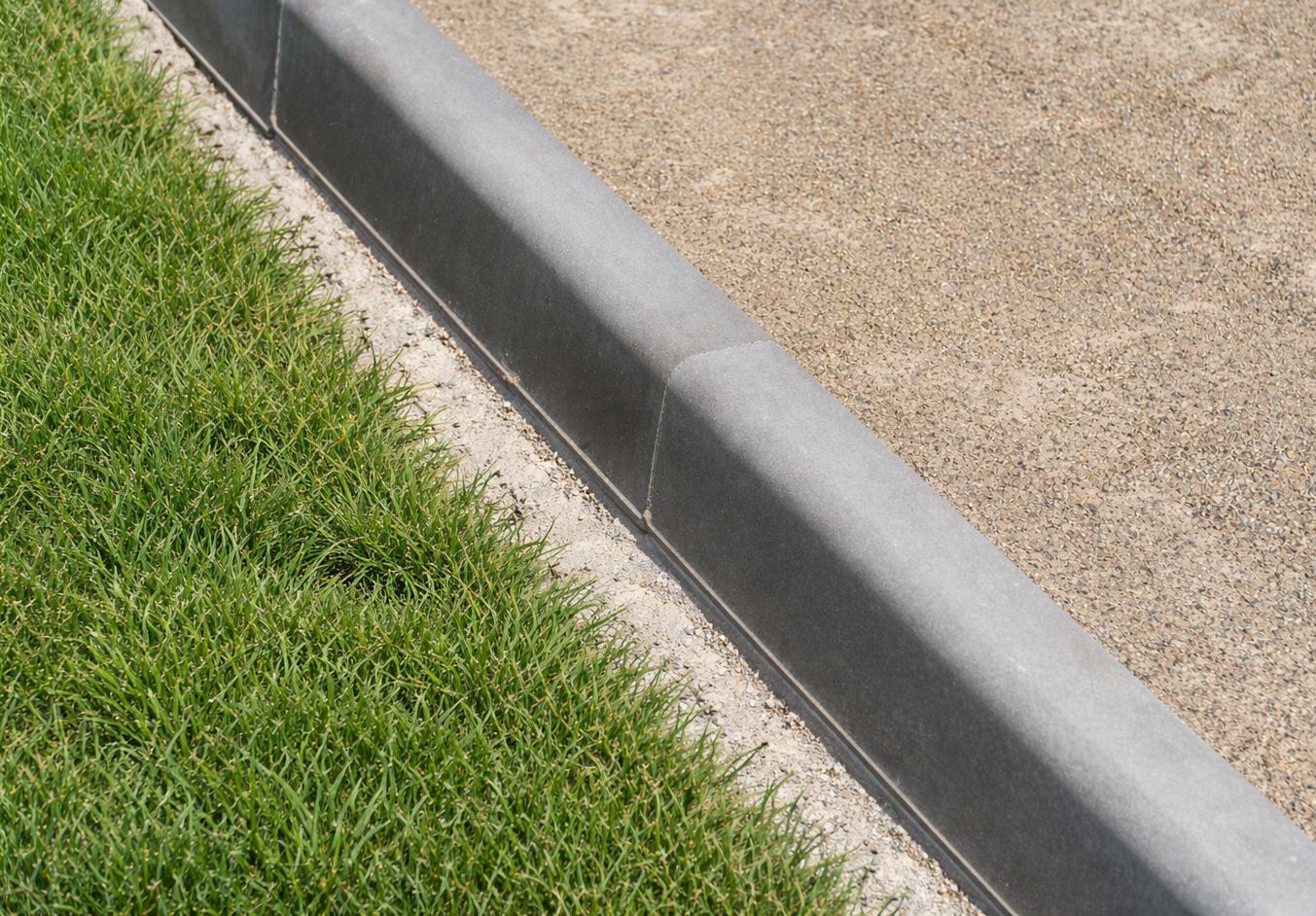
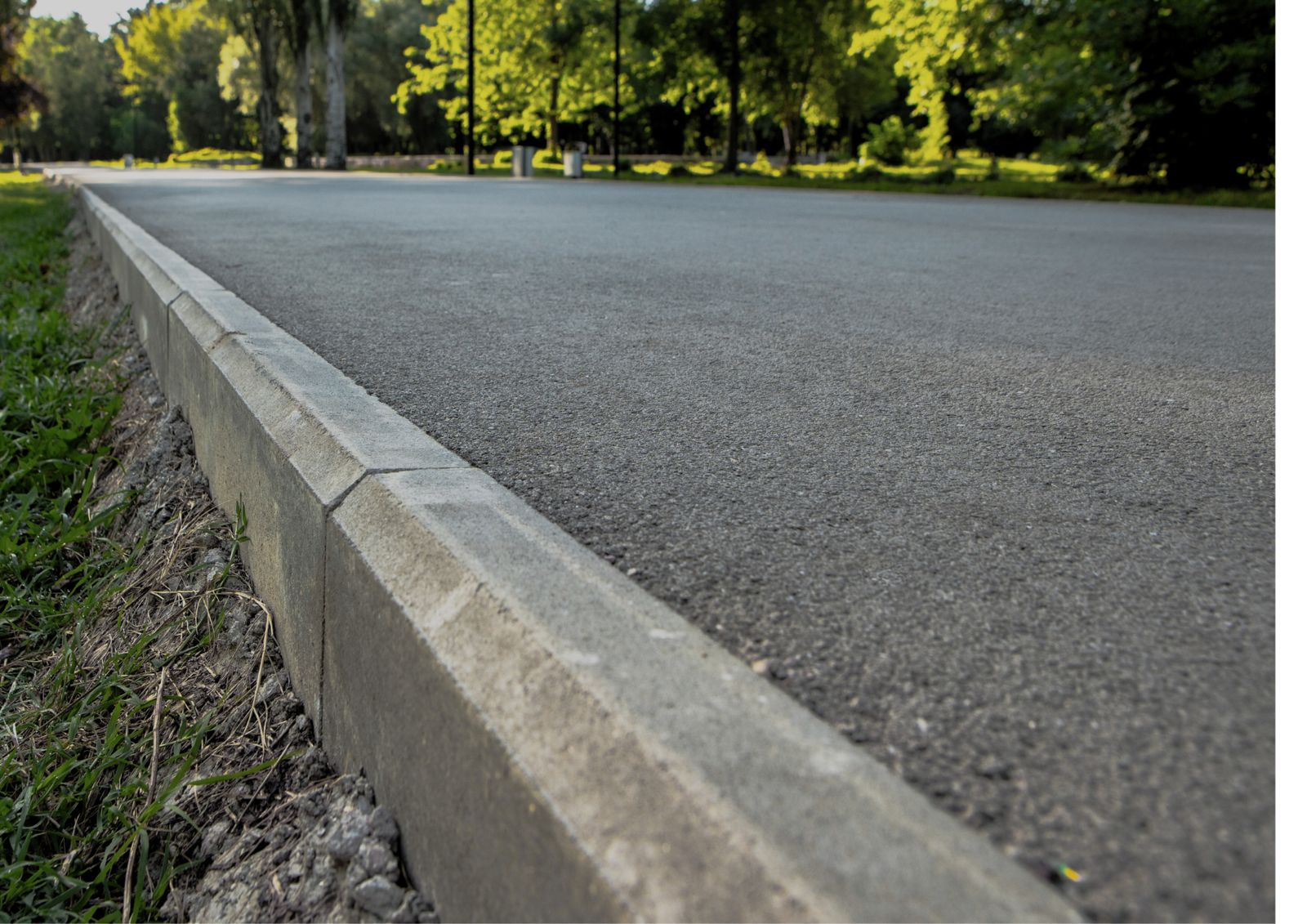
Street edges, highways, roundabouts and intersections. These need the 12/15 cm section: it takes vehicle contact, channels drainage and separates pedestrians from traffic.
Road curbstone
Product page →EGY-CRETE is a concrete curbstone manufacturer in Egypt. We produce road curbstones, garden curbstones and parking wheel stops — pressed on the same lines as our interlock and made to BS EN 1340-2003. The sizes, sections and weights below come straight from the production catalogue, so use them for BOQs and quantity take-offs.
Street edges, highways, roundabouts and intersections. These need the 12/15 cm section: it takes vehicle contact, channels drainage and separates pedestrians from traffic.
Road curbstone
Product page →Lawn edging, planting beds, park pathways and pool surrounds. The lighter 8 cm section is enough here, and it is quicker and easier to set.
Garden curbstone
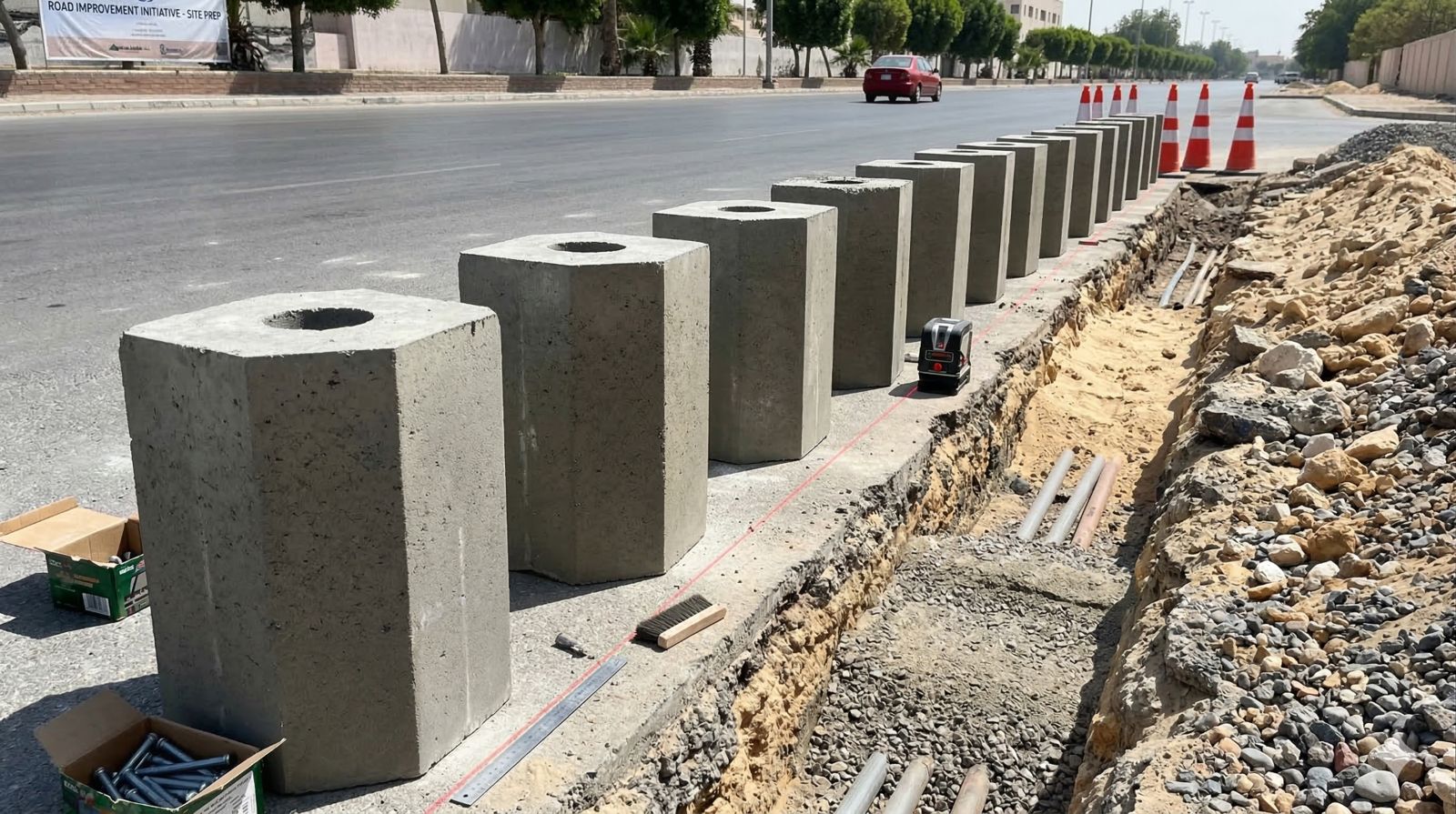
Product page →To stop a car at the end of a bay or mark bay boundaries without running a full kerb line, use a wheel stop. The heavy section resists vehicle impact.
Vehicle barrier / wheel stop
Product page →Figures are taken directly from the factory catalogue.
Standard road curbstone in 0.5m and 1.0m lengths for road edge definition.
| Size | Section | Pieces / linear m | Weight |
|---|---|---|---|
| 12/15×30×100cm | 12/15 cm | 1 | 90–100 kg |
| 12/15×30×50cm | 12/15 cm | 2 | 47–50 kg |
Used for
Finishes: Smooth, Shotblast
Product page →Lightweight garden edging for landscape borders, pathways, and planting areas.
| Size | Section | Pieces / linear m | Weight |
|---|---|---|---|
| 8×30×50cm | 8 cm | 2 | 40 kg |
Used for
Finishes: Shotblast, Washed, Smooth, Honed, Split
Product page →Heavy concrete vehicle barrier for parking lots, industrial areas, and traffic control.
| Size | Section | Pieces / linear m | Weight |
|---|---|---|---|
| 25/30×30×50cm | 25/30 cm | - | ~185 kg/ml |
Used for
Finishes: Smooth
Product page →All EGY-CRETE curbstones are made to BS EN 1340-2003, the European standard for concrete kerb units: dimensional tolerance, bending strength, water absorption and abrasion resistance. The road curbstone is additionally tested to ASTM C 39 for compressive strength.
Important for pricing and BOQs: curbstones are sold per piece or per linear metre, never per m². Measure the run of the edge in metres and divide by the unit length to get the piece count. Interlock pavers are the ones quoted per m².
CertificationsCurbstone FAQ
Three: the road curbstone (12/15×30 cm, in 1.0 m and 0.5 m lengths) for street and highway edges; the garden curbstone (8×30×50 cm) for lawn, bed and pathway edging; and the vehicle barrier or wheel stop (25/30×30×50 cm) for parking bays and industrial yards. All three are made to BS EN 1340-2003.
EGY-CRETE road curbstones are 12/15 cm thick and 30 cm high, supplied in 1.0 m units (about 90–100 kg each) or 0.5 m units (about 47–50 kg each). The 12/15 cm profile is battered, so the exposed face is narrower than the base.
Per piece or per linear metre — never per m². Curbs are a line item: you measure the run of road edge, kerb line or bed border in metres. Pavers are the opposite and are quoted per m². Send the running metres, the profile and the delivery site and the sales team will price it.
BS EN 1340-2003, the European standard for concrete kerb units, covering dimensional tolerance, bending strength, water absorption and abrasion. The road curbstone is also tested to ASTM C 39 for compressive strength, and the vehicle barrier is produced at a compressive strength of ≥400 kg/cm² with water absorption ≤5% and a breaking load of ≥100 kN.
Load and profile. The road curb is 12/15 cm thick and takes vehicle contact, drainage flow and street-edge duty. The garden curb is a lighter 8×30 cm section for lawn edging, planting beds, park paths and pool surrounds, where nothing heavier than a wheelbarrow crosses it. Putting a garden curb on a road edge will break it.
To stop a car at the end of a parking bay and to mark bay boundaries without a kerb line. The 25/30×30×50 cm barrier is heavy enough to resist vehicle impact and is used in commercial car parks, industrial sites and perimeter protection.
EGY-CRETE manufactures curbstones and interlock at 4 factories — 3 in Badr Industrial City (east Cairo) and 1 in Sadat City, Monufia. Supply is factory-direct within Egypt; send your location to sales on +20 103 332 5044 and they will confirm delivery.
Got a project?
Send the curb type, section, running metres and site location and our sales team will reply with a quote and a delivery date.